The Investor Buys the Asset. The Tenant Helps Pay for It.
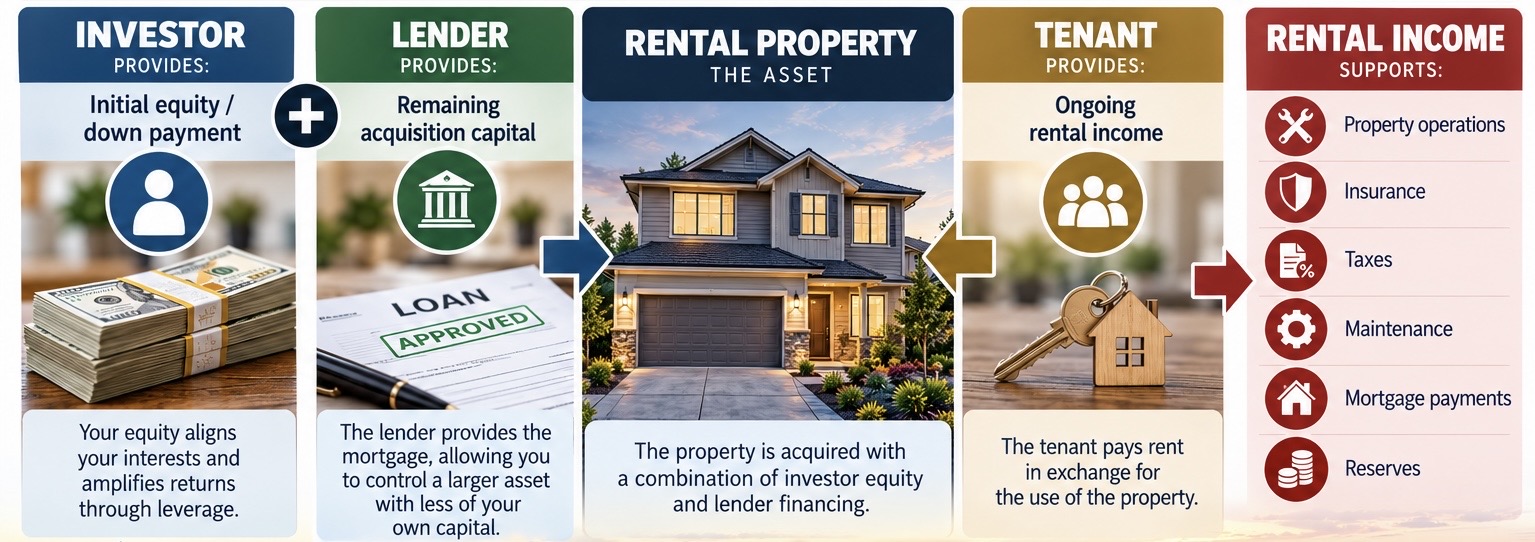
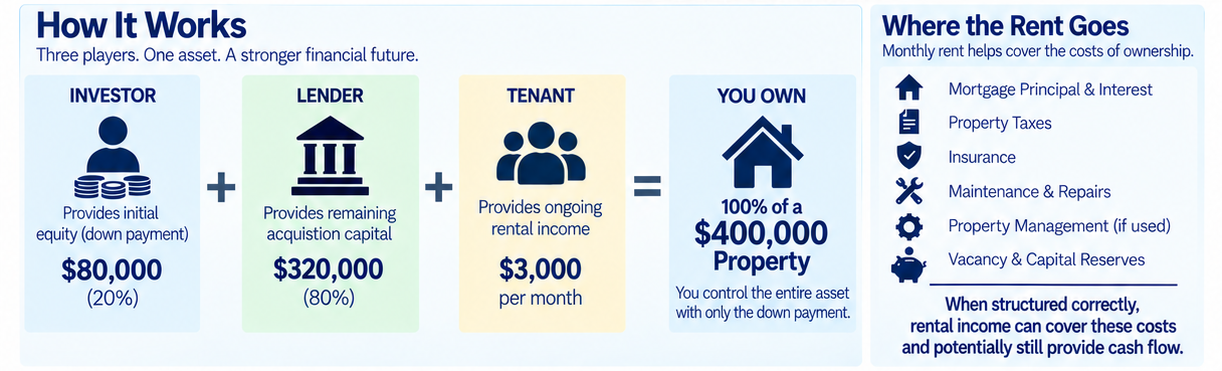
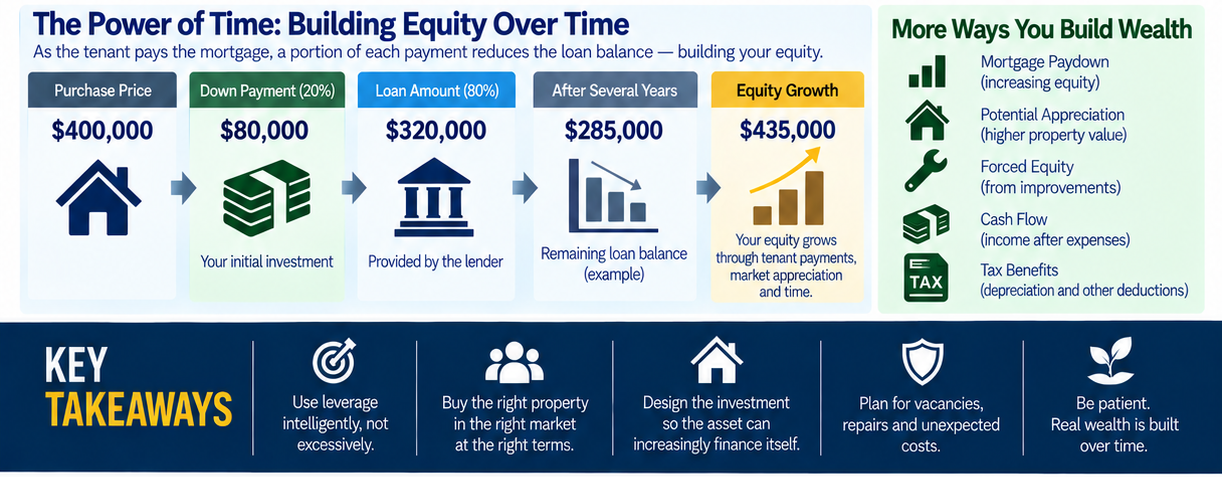
Suppose you purchase a rental property for $400,000 and contribute $80,000 as a 20% down payment. A lender finances $320,000. You now control a $400,000 property with $80,000 of initial purchase equity. That is leverage.
What Happens After the Purchase?
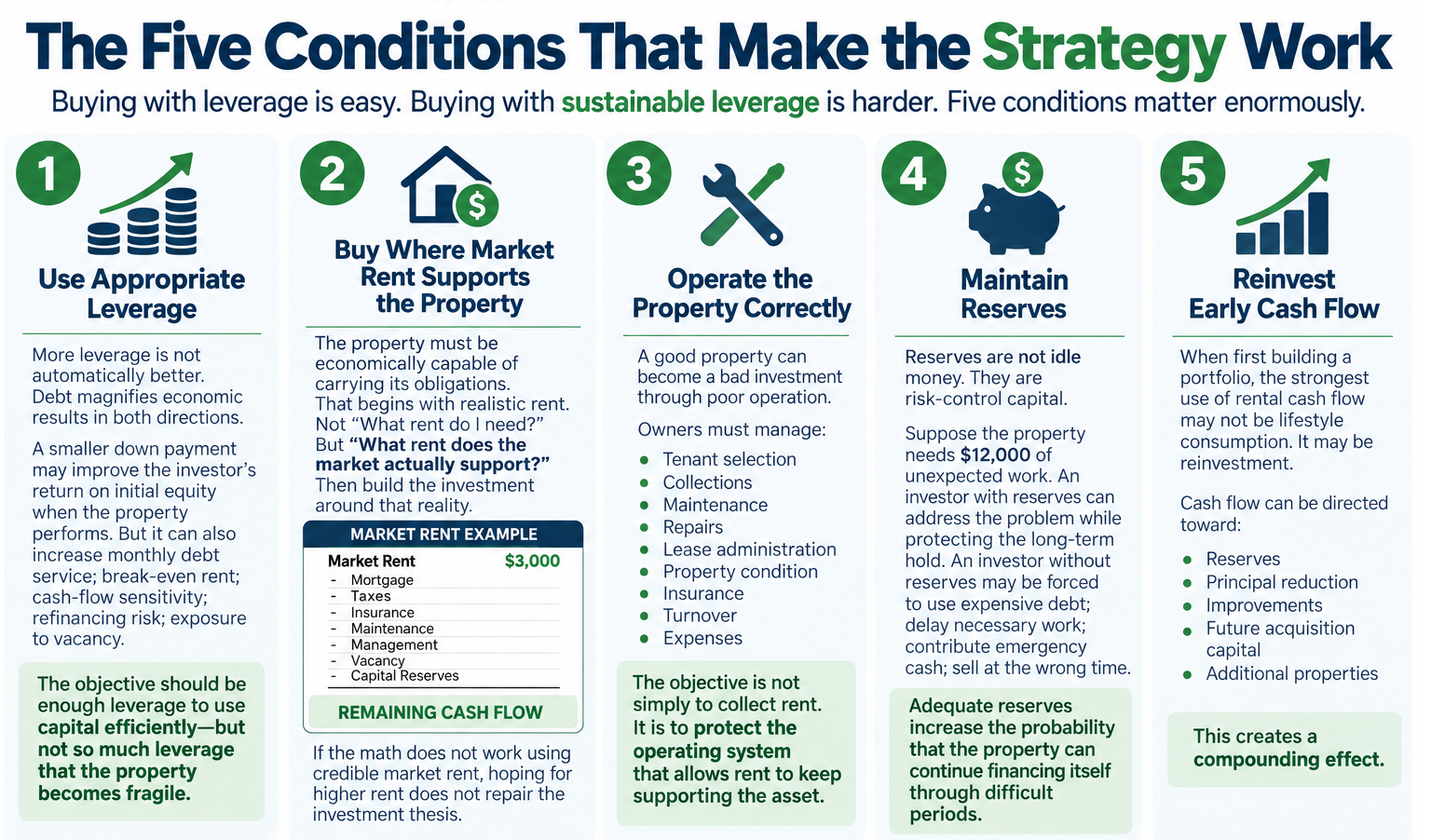
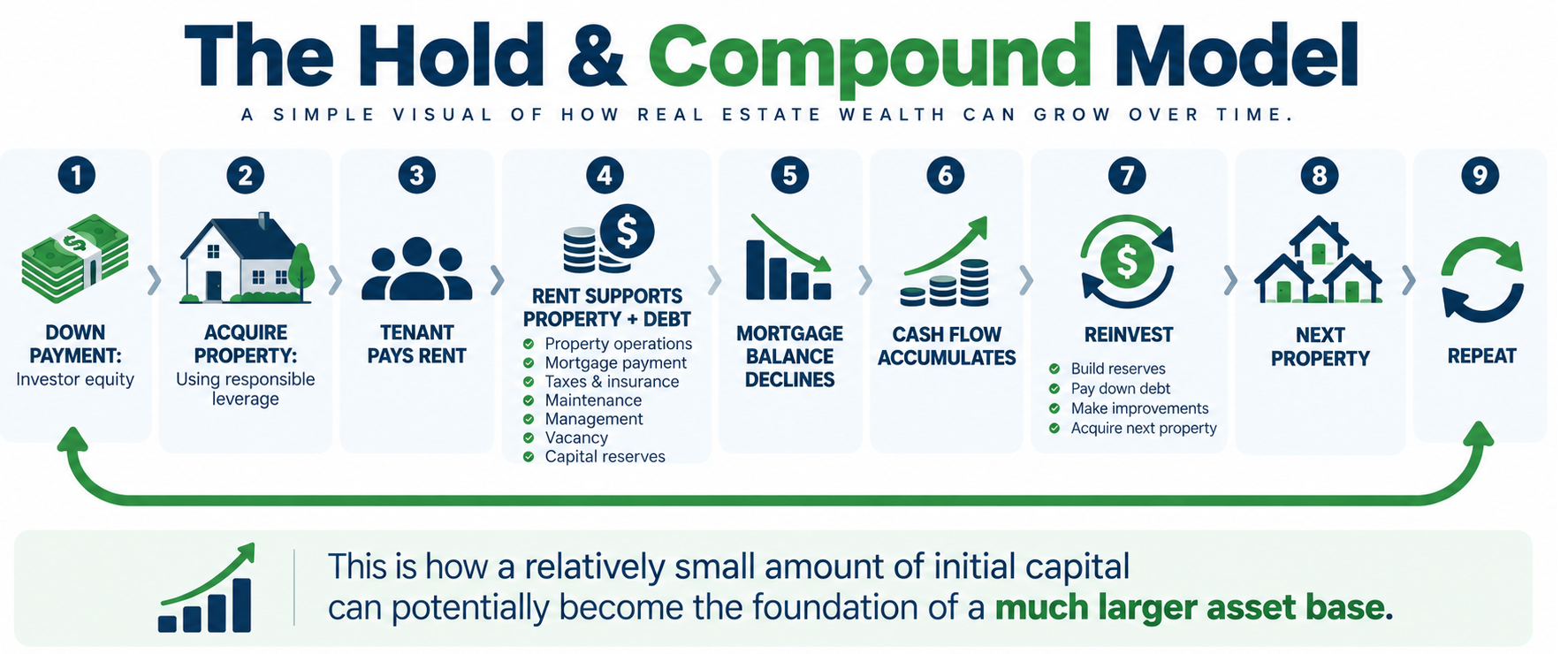
The economics begin to change once the property is rented. Suppose monthly rent is $3,000. That rental income may then support mortgage principal and interest; property taxes; insurance; repairs; maintenance; property management; vacancy reserves; capital expenditure reserves; association expenses where applicable.
If the property has been acquired and financed correctly, sufficient income may remain after those obligations. That is cash
flow. But even when cash flow is modest, another important process may be occurring the mortgage balance can be declining.
Your Real Investment Is the Equity You Put at Risk
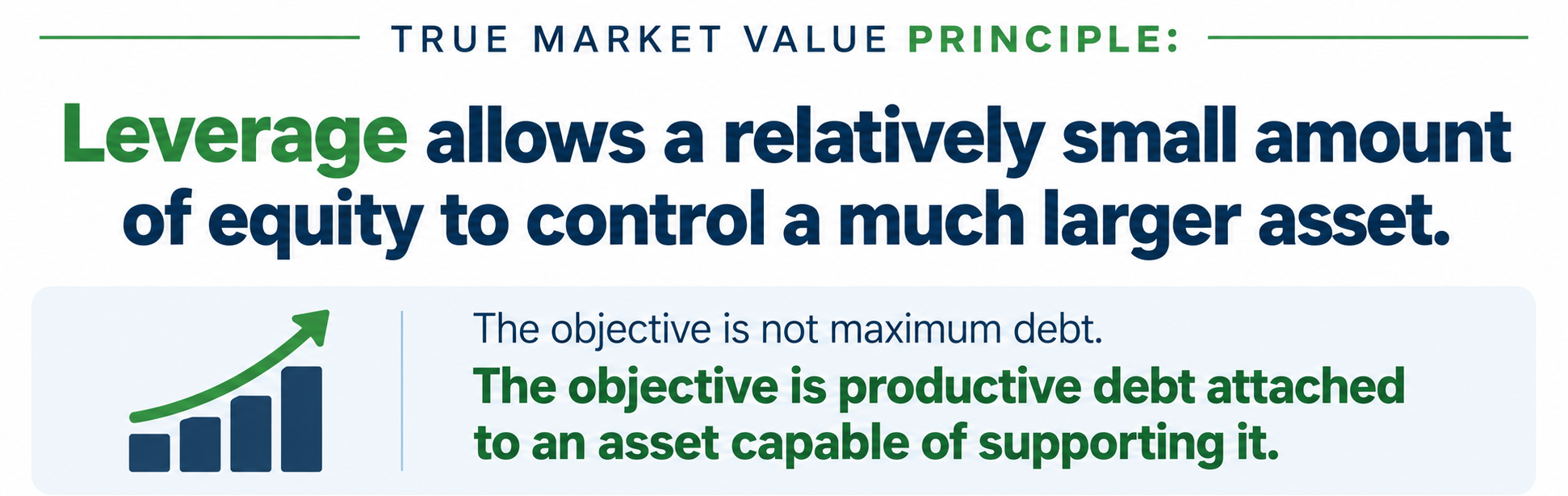
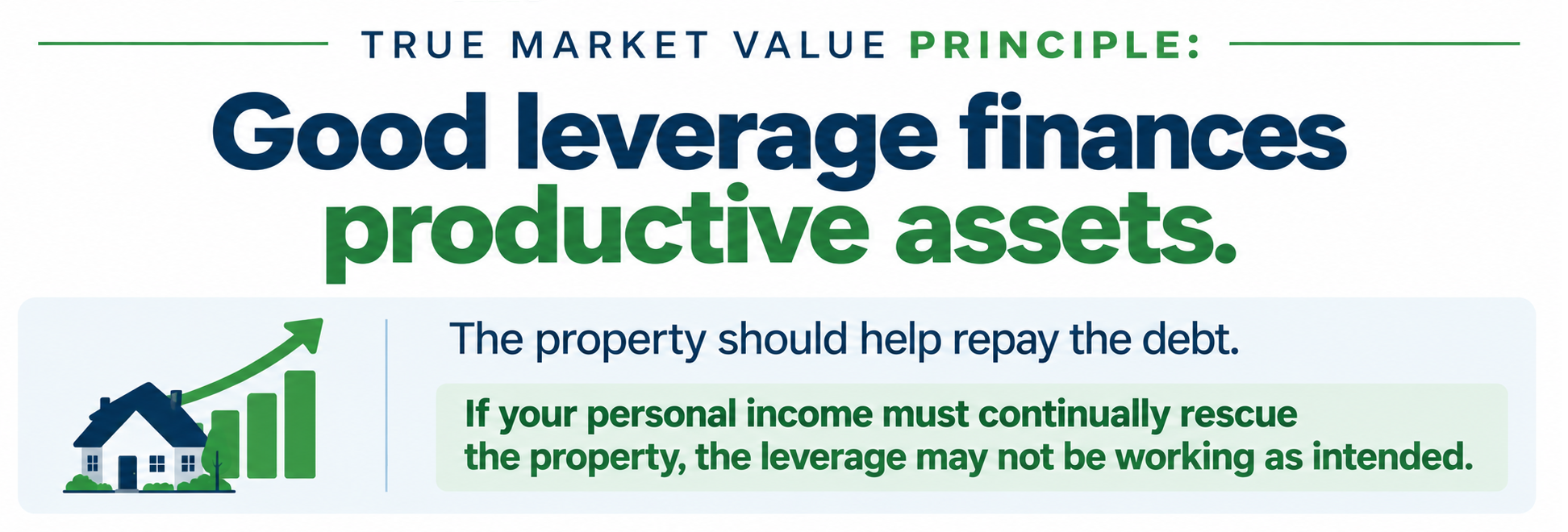
An investor purchasing the example property did not initially deploy $400,000. They deployed approximately $80,000 plus applicable acquisition costs, required reserves, and other initial capital. If a property eventually produces rental income; mortgage reduction; appreciation; Conditional Value improvement; those economic benefits are being generated on an asset significantly larger than the investor’s initial equity contribution. This is the central attraction of responsible leverage.
But “Only the Down Payment” Is a Target, Not a Guarantee
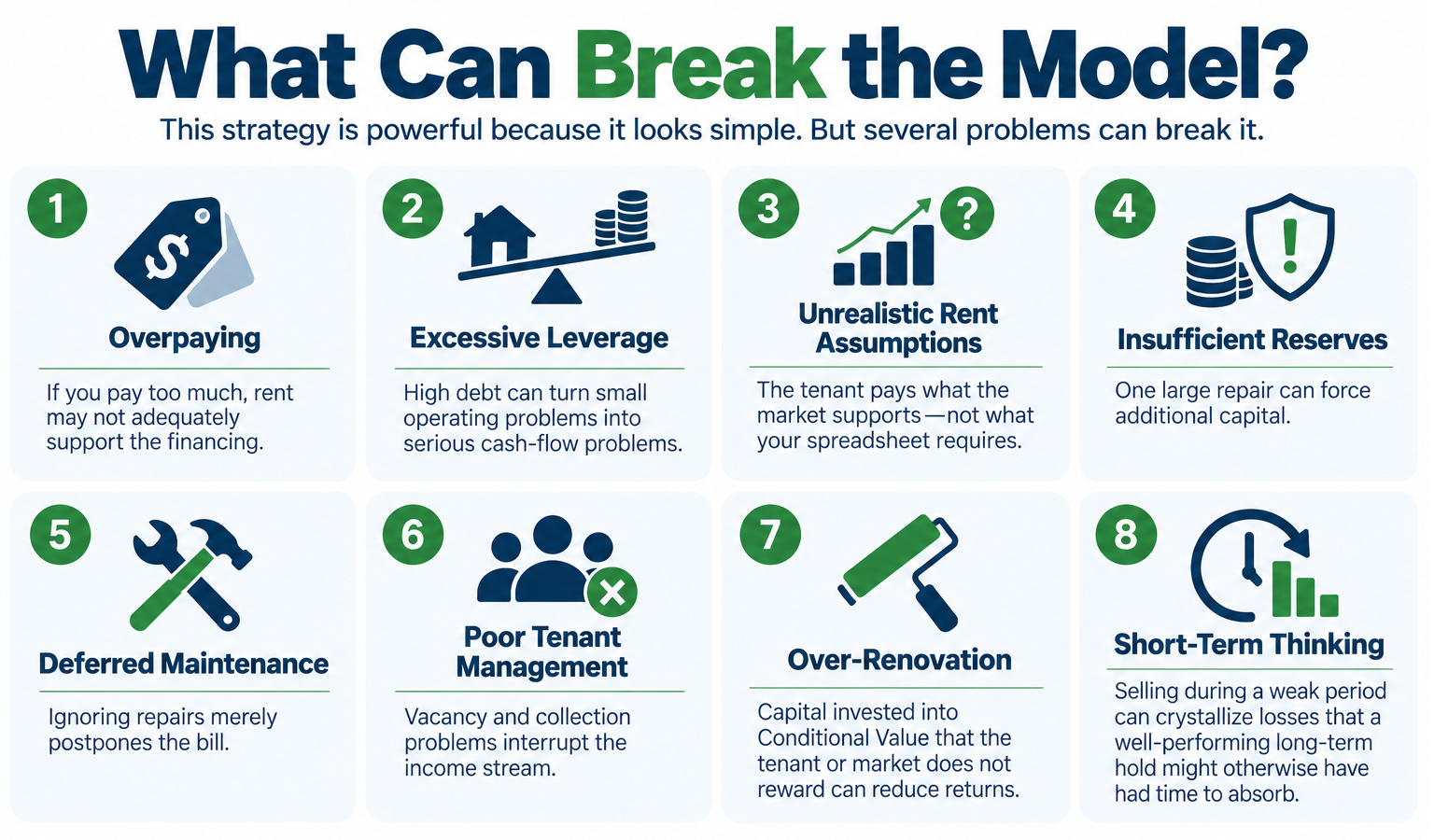
The phrase “Buy the entire property for only the down payment” describes the ideal economic architecture of a properly structured rental. It should not be interpreted to mean an owner can literally assume no other cash will ever be required. Real properties require capital. You may encounter major repairs; vacancy; financing costs; HVAC replacement; roofing; plumbing; insurance deductibles; closing costs; or periods of weak operating performance. The disciplined investor anticipates those events. That is why reserves are part of the strategy, not evidence that the strategy failed.
The Tenant May Help Buy More of the Property Every Month
This is one of the most underappreciated aspects of rental ownership. Part of a typical amortizing mortgage payment goes toward interest. Another portion goes toward reducing principal. As principal declines, the owner’s equity position can increase, assuming all else remains equal.
Imagine: Original Loan = $320,000
After several years: Remaining Loan = $285,000
Difference: $35,000 of debt eliminated
That $35,000 did not necessarily come directly from another $35,000 check written by the investor. If rental income supported the mortgage payments, then the property’s operating income helped finance that principal reduction. This is why rental property can operate as a long-term equity-building machine when the economics are structured correctly.
A 30-Year View Changes the Math
Real estate is frequently evaluated over one year, but buy-and-hold wealth is often built over decades. Imagine a properly financed rental with a 30-year amortizing mortgage. During those decades tenants may change; rents may change; expenses may change; property value may rise or fall; repairs will occur; markets will cycle. But if rental income consistently supports the asset and the mortgage continues amortizing, something powerful can happen: The debt can eventually reach zero.
At that point, the investor may own the property free of acquisition debt. The original acquisition might have involved a relatively small portion of the property’s purchase price as equity. The remaining acquisition financing was progressively retired over decades while the property was producing rent. That is what the title means: Buy the entire property for only the down payment. Not literally on Day One. Economically, over the ownership life.
But Value Still Matters
It would be a mistake to conclude that property value is irrelevant. Value matters for acquisition; refinancing; sale; loan-to-value ratios; portfolio risk; estate planning; overall net worth.
More importantly, buying at an intelligent value improves the margin of safety from the beginning. Suppose an investor contributes 20% equity. If the property was purchased near reasonable True Market Value and maintains durable Fundamental Value, a moderate market correction may reduce paper equity without necessarily eliminating the investor’s entire position. But severe declines can occur. That is why TrueMarketValue does not recommend simply saying: “Values always go up.” They do not. The stronger thesis is: Buy strong real estate with enough equity and enough operating performance that you do not need short-term appreciation to make the investment work.
The Down Payment Becomes Your Margin of Safety
Think of initial equity as serving several functions. It reduces the loan balance; improves financing ratios; creates a buffer against value declines; lowers required debt service relative to higher leverage; provides lender and investor protection. This is why the correct down payment is not simply: “As little as possible.” The appropriate amount should reflect the property, financing, rent, reserves, and risk.
Rental Real Estate Creates a Different Relationship With Debt